

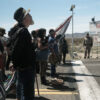
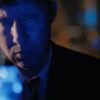


“What’s driving you?” a friend of Jinwoo (Andy Koh) asks him as he plays pool in “Before the Call,” to which an answer comes back so immediately that it’s clear he missed the first word when he refers to Minji (So-Yi Kang), an old flame who will be taking him to an army base 24 hours hence. Had Jinwoo not been preoccupied with what all that means for his future, he might’ve heard his friend trying to give him a break to consider what it is he wants rather than where others are taking him after deciding to join the South Korean army for a tour of duty, in part out of patriotism but also, as it increasingly appears throughout the course of the day before enlisting, a lack of promising alternatives when whatever spark he once had with Minji has settled into a polite friendship and a visit to his father (Gwang Rok-Oh) reveals the two don’t have a lot to discuss even after spending quite a bit of time apart.
What may look like a dead end to most, however, has always held opportunity for director James Choi, who not only finds a touching drama in Jinwoo’s final moments of freedom before committing to a life he may or may not want, but on a practical level, fashioned the character study when the development of another project unraveled and he set about a seven-day shoot with next to no budget. The end result hardly looks like a product of such limitations, gracefully moving about Seoul as Jinwoo looks back at old haunts and can occasionally see something new in them at a crossroads in his life, and while Choi may have had little time and a spartan crew of four on the ground (director of photography Su Bin Kim, sound operator Dong Hyeon Kim and producers Jeesoo Lee and Diane Y. Suh), he clearly had enough experience to draw on to make Jinwoo’s journey alluring with arresting compositions throughout and complicated when considering the conflicted emotions of a young man on the verge of starting a new chapter without feeling entirely ready to close the old one.
Choi has shared his wisdom generously for years as a professor at DePaul University in Chicago where he spearheaded Indie Studio, a place where film techniques aren’t only taught but put to practice on micro budget productions such as Linh Tran’s Slamdance-winning “Waiting for the Light to Change,” as well as helping out local productions such as Kelly O’Sullivan and Alex Thompson’s “Saint Frances” and Haroula Rose’s “All Happy Families,” and it is marvelous to see him return to the director’s chair himself for a feature for the first time in nearly a decade with such an resourceful and reverbrant drama. With “Before the Call” making its world premiere later this week at the Chicago Film Festival, Choi graciously took the time to talk about being back behind the lens after showing so many up-and-coming filmmakers how it all works, the excitement of embracing the unexpected on set and how the film is such a full circle moment personally and professionally.
How did this all come about?
It was crazy. I had an opportunity to go on sabbatical last year, so I decided that I was going to go to Korea. I had this script that I’ve been working on that had won the development lab in Chicago the year before and there was a lot of support [for it]. I felt good about it and I was going to go to Korea and figure out how to make this. I hadn’t been to Korea for 40 years, so the culture shock of that trip was going to be incredibly enriching for myself to reconnect and I brought my whole family. We went down there for six months and that script ended up selling. It was a finalist for the Tubi Blacklist Commission initiative after prepping for three months, but then it sold, so I had to pivot and decided to come up with “Before the Call,” which became a much more personal and smaller film [to direct].
I was in L.A. for over a decade, working in the industry, and then went back to Chicago 16 years ago and since I’ve been back, I’ve just been really focused on the process and what independent film means and what cinema means. So the approach ultimately came down to this idea of [asking] what the biggest hurdle for filmmakers to tell their stories? Everything always comes down to money, so I [wondered] how is there a way to eliminate that in the process? When the other project fell through, I [thought] I have a forced opportunity to go there [to Korea] and do that and go back to the thing that I’ve been preaching and to apply that to my own work and see how that how that felt.
From what I understand, Andy actually had some military background, so were he and the other actors involved in shaping their characters?
Yeah, Andy’s also a first-time actor and when I went to Korea, I didn’t know anybody there. I was posting on Facebook and IG groups and all sorts of neighborhood pages, just looking for creatives who wanted to collaborate. Andy’s partner Jeesoo, who ended up being a producer on it, ended up reaching out. They’re from the States, but they were in New York for a while and went to Korea and have been living there for two years, developing their careers. He wanted to pursue something creative and so did she, coming from more of this corporate world in New York. He had started an Instagram page and was doing the social media influencer thing when I met with him and I [thought] “This dude’s totally comfortable. He’s built a really strong following,” and I thought it was a great opportunity, so we just started talking.
He was also going to be the lead in the other film that I was going to do, so when that fell through, I wanted to do something with him and opened up the dialogue about the thematic elements of “Before the Call” and started to learn a lot about the pressures of duty, legacy and obligations – all of the things that go with being a part of a country that requires mandatory military service. Even though he grew up in the States and didn’t need to [enlist] when he had initially moved there, he was still under some pressure, thinking “Is this something I need to do? Do I need to be a part of this to belong and be truly accepted as a Korean?” I thought that was fascinating and obviously he brought a lot of that internal struggle and experience to the film, which was just amazing.
You’re able to get into the character’s head quite elegantly with these letters that are placed throughout the narrative that he wrote to Minji. How did that idea come in as part of the structure?
Yeah, this was really quick and obviously really small and I had the amazing honor and privilege to be able to study under Abbas Kiarostami before he passed away and Apichatpong Weerasethakul. They had such a profound impact in the way that I see cinema. For me, filmmaking and directing is really a process of self-discovery and just simply creating, so sometimes what I’ve realized is that if I have everything figured out or [I think] “This is exactly what I want to do,” especially when we’re working with limitations, then my projects start to become stilted and it starts to become predictable, so I keep that idea open. So this started from a 35-page script and those letters ultimately came in that self-discovery in the edit, so it wasn’t even in the script. I was writing as I was cutting, really starting to think how do I really tie things together. How do we give some insight into both the character and the story in an otherwise very quiet film?
You pulled it off. And I’m surprised to hear it was your first time in Korea in sometime because some of the locations are so well-placed, such as the first meeting between Minji and Jinwoo, that they seemed like they lived in your head for a while. What was it like to film there?
Yeah, I was there for six months and a big part of the prepping wasn’t all work. It was hanging out with my family, being a tourist and absorbing the city of Seoul, which is primarily where we stayed, and as I’m going around, I’m thinking always thinking of story and interesting locations that could potentially work. I may not know what the story is going to be, but I’m just always looking and and obviously those places – in particular the stream [where Jinwoo and Minji first meet] was definitely a place that myself and my family had gone to many times, just to get away and relax and separate ourselves in the middle of a city. It just worked out that I had the time where I wasn’t rushing and I was able to take in the city for the first three, four months before we started shooting and that gave me a lot of insight as well as all the collaborators obviously who provided a lot of suggestions as well.
I’ve heard there was a four-person crew in Korea, but then you also were working with Judi Krant, a producer back in Austin to help coordinate. What was it like figuring out a production like this?
I know it’s crazy because obviously I’m Korean American, but I’m detached to the nuances of what that means and what it means to truly live there, so there’s a lot of American sensibility. Judi [Krant] is somebody I’ve worked with forever. I produced her first film that did really well and almost in a weird way brought me to Chicago, so we’re always talking and when I had initially come up with this idea, she was just there in regards to me throwing ideas out.
Once that happens, I have to then go, “Okay. Well, here’s the American sensibilities and thought processes about this situation,” but then I bring that to the Korean crew and say how does this work? Does this feel authentic [after] coming from a place of outsiders who are completely oblivious to the situation or does it make sense? Then I try to find the humanity in it and ultimately I realized even when Korea is such a homogenous country – it’s about 90% Korean, so everybody is the same – but then I’m there sitting on the train, I remember looking at all the people on the train and thinking this feels very different aesthetically, but then I see the way that people live and function and what they do and there’s no difference to sitting on the L in Chicago. So I was just trying to find that humanity that connects us all because at the end of the day, we have all the same dreams and aspirations in life and amongst the differences and the nuances, they give me that good balance.
Just thinking of the subway, one of the great shots in the film is seeing Jinwoo stand in front of one as it passes and in general, there are a number of striking compositions throughout. What was it like working with your cinematographer on this?
This is a biggest separator [in Korea] between what I’ve been accustomed to in the States and being at a film school is the obsession with gear and this prioritization of what’s important in cinema. Oftentimes [in the U.S.] we forget this idea of character, of story, of performance and we start to lean into the visual elements and we think we need all this equipment. When I met Su Bin [Kim, the DP], who’s super talented, we were just talking about movies and the story. I had seen his work and thought it was beautiful. Then when it ultimately came down to the logistics of shooting, I was like, “Hey listen, I just brought an [Sony] FX 3 from the States that I have, a travel tripod and one lens. Do we need to get more?” And of course, this is no budget film and my insecurities coming from that [were exposing themselves] like, “Do we need to get some better lenses?” And he [said], “oh no, this is totally sufficient,” based on our discussions of what we’re trying to accomplish. And when he said that, he was the one that gave me the confidence to overcome those fears. So I [thought], “This is the guy and he was just amazing.” Our process and collaboration is so loose and I think if you can talk and understand story and each other’s vision, then once you get out there, it becomes so, so satisfying.
When you’re on the ground for a seven-day shoot, did anything happen that changed your ideas of what this was or just seeing the dynamics between the actors?
Again, this was based off of a 35-page script, so there was a lot of space there outside of very specific lines and the overall overarching theme, and a lot of it was the dynamics of speaking to the actors about story and because I wrote it in English, a lot of the translation [involved] talking to the actors about it, trying to help them understand what I wrote in English and what was the intention and motivation, trying to see what’s representative of that in Korean. They had a really good understanding of that going through that process together and then on set, it’s really about discovery and trusting they had really good handle on this and then seeing it all unfold. All of it felt like that to a certain degree in regards to discovery and surprises, but I was never scared or unsure because I know that the process of filmmaking is not just about production. The writing part is important. The production part is important and I’m just trying to get as much within that time frame that I had and I know that once I get into the editing room, things are ultimately going to change.
But it was full of amazing discoveries and nuances in the way that they interacted. Guan Roque was the one person we didn’t really have access to [because] in terms of celebrity and he would definitely be the wise sage of the group, so we met him the day of [filming] and spent what were two intense days – we even did an overnight with him. But I just love the rawness and the dynamics of these two people [in his scenes with Alex as his son] and Andy was fully aware of who he was and it was one of those things where he was calling his parents, [saying] “Hey, guess who I’m acting across?” [The entire cast] knew exactly who he was and obviously that also can add a sense of excitement and maybe some anxiety, but all that can be focused and centralized into the performance, which I think absolutely came across and just all of us meeting and then jumping into into creation in this way, it was really thrilling and satisfying.
You’ve helped a lot of exciting filmmakers at the start of their career find their footing on their first features. Have you found that inspiration to be a two-way street?
Yeah, in L.A. I was always around creative people, working with writers and directors and I was never writing or directing myself, but I was around that process. When I came back to Chicago, I just really thought about the process and what that meant, so after producing my first film with Judi that had tremendous success, I adapted “Detour,” the 1940s neo-noir, and I just shot this feature on my own with one other person and I DP’d it and it was called “Faith and Destiny” and I just did a feature on my own. The results were really, really satisfying and it didn’t play top-tier festivals, but it played in lots of major cities and it was even on Hulu because that was when Hulu was starting out and taking these weird independent films.
It was amazing to have that freedom [then] to run around the city by myself and shoot a narrative with two actors, so I took that with me and that’s led to supporting other filmmakers with the creation of Indie Studio [at DePaul], so to be able to [direct a film] 16 years ago, and I did another in between that was also in that same model, but [to direct another] while I’m preaching this model and helping others do that, it’s full circle to come back. I’ve learned a lot myself from doing it twice and now I just get to further push the envelope here and apply these ideas that I’ve been thinking about and sharing with others and man, it’s tough to do it any other way.
You’ve come full circle in another way with this premiere coming up at Chicago and you’ve been to Seoul and back. What’s it like getting to this place with the movie?
It is truly full circle. “Made in China” was the first film I produced and Judi had written and directed that went on to premiere at South by Southwest and won the Grand Jury Prize. That played all across the country that year and it came back to Chicago where I grew up and it played at Chicago International, where it won the Silver Hugo and that’s when I was introduced to people at DePaul and there were some things going on in my life [where] I thought maybe I needed a change, so that was the impetus that brought me to Chicago and 16 years later, now to be a writer/director and to have a feature film I wrote and directed premiere at Chicago International is just unbelievable. It’s just been an incredible journey where it feels like things were lined up and this is how it was supposed to be. It’s an incredible privilege and I’m just super excited to have a premiere here.
“Before the Call” will screen at the Chicago Film Festival on October 25th at 5 pm at the Gene Siskel Film Center and October 26th at 12:30 pm at the AMC Newcity 14.