


“Attendance is down everywhere,” Dan (Young Mazino) protests to the bishop (Tony Hale) at his church in Kansas upon hearing that there have been complaints about his sermons in “Via Negativa,” leading to a drop-off in parishioners in a place where turnout is relatively sparse to begin with. Although it’s his erratic approach to the gospel that’s cited as an issue, it seems as if his flock may have picked up that Dan has become something of a nonbeliever himself, making the eventuality of hitting the road after losing his residency at the place of worship seem a little more of a smooth transition when he already can appear as if he’s just drifting along untethered. As a bartender (Zoë Winters) says at his first stop after he is defrocked (yet continues to wear the clerical collar), she doesn’t get many “whiskey-drinking, karaoke-singing priests” coming around after he steps up to the mic to sing the Killers’ “When We Were Young” when the person that actually chose the song has left, a fitting metaphor for the track he’s on.
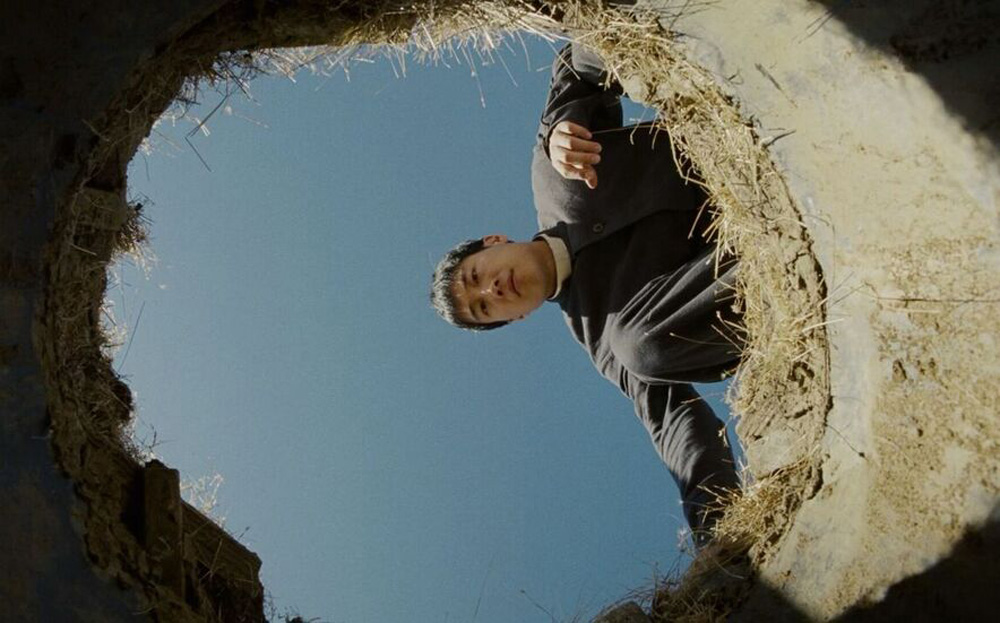
Eventually, writer/director Hannah Peterson gets around to the root of Dan’s discontent, but it should be considered as part of a larger project that the filmmaker embarking on, following her arresting debut “The Graduates,” which detailed the fallout from a school shooting as those who survived sought to heal their wounds. Peterson hasn’t quite made her masterpiece yet, but has given ample evidence that she’s well on her way towards it as she considers unfathomable evil that this generation in particular is unable to comprehend in adapting Daniel Hornsby’s novel where it gradually becomes clear that Dan is reeling from the recent death of a classmate from the Catholic prep school they attended together, surely overcome by grief from the experience they shared there. Dan finds he isn’t alone on the open highway, at least in feeling isolated, with people learning of his profession and asking for a blessing or a chance to confess, not sure of where he’s headed exactly in the early going, but deciding to hit roadside attractions to entertain himself, quite literally heading straight for what’s known as the “Hole to Hell,” a bottomless pit where he can’t hear the echo of the rock he throws into it.
While Peterson’s allusions can be a bit on the nose at times, the details that come to form Dan’s drive in any sense of the word are expertly parsed out like breadcrumbs that could get frustrating if the director didn’t know how to draw out a sense that the priest is really piecing things together for himself as well, unblocking traumatic memories that were long suppressed and that he attempted to reconcile by making a greater commitment to his religion rather than distancing himself from it. Mazino, whose broad shoulders make it seem like he can carry the weight of the world with softer facial features that suggest he doesn’t always know what to do with all of it, is an ideal fit in the part and he is eventually joined in his travels by Anna (MiMi Ryder), a teenager he meets around the “Hole to Hell” who is desperate to escape the desert yet doesn’t appear likely to find what she’s looking for in Wyoming, her destination of choice, either when she’s marked by tragedy as well.
No one has much in common besides a shared sense of disillusionment, but as in her previous film, Peterson is able to create an interesting dialogue where everyone can be heard as they struggle with the idea that anyone is listening and each conversation between strangers feels like worlds colliding. The encounters can be as dryly amusing as they are uncomfortable and the director sets the off-kilter tone early with a slo-mo introduction of writhing bodies in awkward contortions that grows more powerful in the back of your mind as the film wears on, beautifully bending reality where people that would have no way of ordinarily reaching each other find a place to meet. Ironically, the scene is meant to reflect the unorthodox practices that lead Dan to banishment from the church, but Peterson creates a sacred space of her own to congregate.
“Via Negativa” will screen again at Tribeca at the Village East on June 6th at 5:45 pm and June 9th at 2 pm.