



If anyone could understand how difficult it was to coordinate a response in the wake of a plane crash that left Lesly Mucutuy, a 13-year-old, in charge of her younger siblings Tien, Soleiny and Cristin wandering the Amazon rainforest alone for 40 days after their mother died, “Lost in the Jungle” directors E. Chai Vasarhelyi, Jimmy Chin and Juan Camilo Cruz got a taste of it in trying to gather all the interviews necessary to do justice to the story.
“It was a really complicated production and a really complicated story to tell, and I can’t imagine it working any other way,” says Vasarhelyi, who has developed an extraordinary skill at tackling such sprawling tales, having recently come off making “The Rescue” with Chin about the 19-day saga of the Thai soccer team that got stranded inside a cave in 2018. Their agents at WME thought to put them in touch with another client in Cruz, when the Colombian filmmaker had secured the access to Lesly and her remaining family to talk about her experience that captivated the entire country in May of 2023 and the partnership led to a film that celebrates collaboration against all odds.
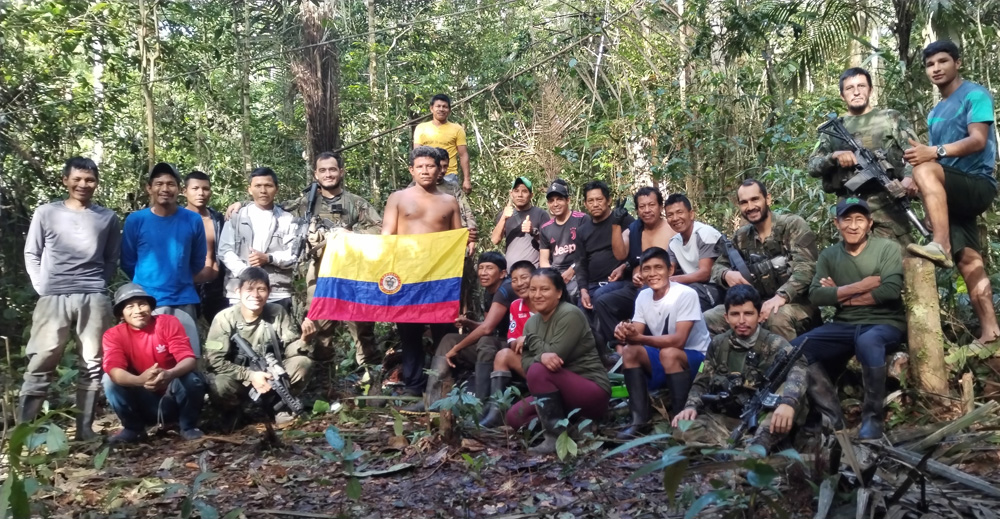
In recounting the frantic search for the Mucutuy children, the filmmakers are able to speak to a remarkable story beyond returning the kids to safety when the indigenous communities and the government are required to work together for their benefit, but have to look past their long distrust of one another since the genocide of native people in the name of the country’s rubber industry, resulting in tens of thousands of deaths. The cause of saving the Mucutuy children, however, sees the military defer to the wisdom of the Natives who advise ayahuasca could be helpful to see things more clearly in the forest and insist on the soldiers carrying alcohol with them when it could help ward off evil spirits, going against protocol, but fostering cooperation. The effort required everyone from local tribes to president Gustavo Petro, all of whom are interviewed in the film, and as many people as Vasarhelyi, Chin and Cruz talk to get the full story of the rescue, simply getting to the truth of why Lesly’s mother Magdalena felt compelled to get on the plane in the first place at the request of an abusive ex takes layers upon layers of difficult conversations, a search that proves as gripping as the ultimate goal of locating the children.
With “Lost in the Jungle” premiering this week on National Geographic and ultimately streaming on Hulu and Disney+ after a debut recently at Telluride, Cruz and Vasarhelyi spoke about how they joined forces on this propulsive nonfiction thriller, how being conscientious of the age and temperament of those they spoke to led to some inspired creative decisions in terms of the storytelling and what it took the organize a narrative that involved so many different characters.
 How did this all come about?
Juan Camilo Cruz: I’m Colombian, so I was here as the story was unfolding, and at the beginning, it wasn’t that big of a story because people thought that it was just a plane crash and nobody would have survived. But when they realized that there were four kids lost in the jungle, it became a huge event in Colombia that everybody was following day by day. As the whole country was following the story, as a documentary filmmaker, I thought, “Wow, this is such a powerful story,” and when I understood the rescue operation and everything that was happening, I just thought it was just a remarkable miracle, so I got in contact with the rescuers and started to talk with them. And then once we started peeling the different layers of the onion, we started to realize that the story was bigger than we were actually expecting — the reasons why the kids were actually in the plane in the first place — so we let the story just come to us in all these voices that we were collecting as we were starting to do our research.
This may have broken my brain thinking about how many perspectives it has with a constant and consistent version of events, but allowing for all different angles on it. What was it like to put together?
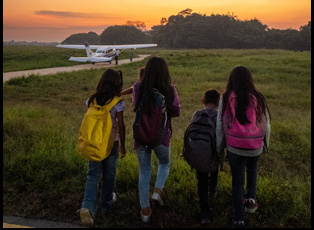
Chai Vasarhelyi: Everything changed when they realized the children were alive or could be and that’s when it really became a global sensation of a story. But then when they finally were rescued, it was this huge mystery. How were four children — a 13-year-old being the eldest and including an 11-month-old infant — possibly able to survive for that for 40 days in the jungle? And moreover, how could they not have been found earlier? It just seemed like there were a lot of mysterious circumstances around it and I give Juan Camilo a ton of credit, in terms of how he was very quickly able to gain access to a lot of the main players and it was just like layer after layer. We understood it’s not very often that indigenous communities get to tell their own story and their own words, so there was this added commitment to really exhausting all the sources to be able to understand and respect that several things can be true at once and there are different belief systems at play. [We thought] there must be something extraordinary about this young girl who was so committed to her siblings she kept them alive, so there were all these questions and it meant that we had to talk to everybody.
Juan, this seems like a unique opportunity to address the entire history of Colombia dating back to the Putumayo genocide when the indigenous community has to team up with the military to find the children, despite the deep divisions of the past. Did you know from the start that was a possibility?
Juan Camilo Cruz: Absolutely, and that’s also what fascinated me. I live in a country that is extremely polarized and has various different groups and factions and wars and conflicts among the people and this was an opportunity to show an example of how could people that are from completely different universes and belief systems come together towards a common goal. If you know the story of my country, you know how complicated it has been and how complicated it is still is right now, so I think it’s just the right moment to tell a story like this.
Chai Vasarhelyi: I found the testimonies from the military and the special forces, who are for the most part Catholic, and their sincere embrace of the indigenous communities belief systems and that journey they go on was very inspiring. It’s a great example of how people can find common ground, despite the social, political, economic circumstances that are very complicated in this story.
 Chai, this certainly isn’t a carbon copy, but it reminded me of your work on “The Rescue” for a variety of reasons – having to portray this kind of event in retrospect in such a lively way, being sensitive to the trauma experienced by the people you’re talking to and conveying so much information in a way that’s easy for an audience to process. Did it turn out to be good preparation?
Chai Vasarhelyi: This loss in the jungle is related to “The Rescue,” and “The Rescue” is probably the reason why I really desperately wanted to make this film. And it is about craft — about how to reconcile two different belief systems? How do you chronicle something that you have absolutely no footage of? There were a lot of similar questions, but the real reason I think [I wanted to make this] was on “The Rescue,” we didn’t have access to the children because there was a complicated rights situation between Nat Geo and Netflix. So when this story came, I went to Nat Geo and I was like, “We need all the access. “We need all the rights.” And it’s worth fighting for because it’s not often that indigenous communities get to share their own story.
Being an indigenous girl [as Lesly is] is a really tough circumstance, just given the circumstances of what your life actually looks like and then additionally being the victim of domestic abuse, so I had this feeling that if you did this right, it would affect these kids’ lives. That was this burning mission for me, and maybe it’s because I’m a mother, but I also knew that there must be something extraordinary about Lesly and there must be more to why they were missing for so long. She must have made some really difficult decisions. And ultimately she was like a mother to her siblings and made the very hard decision of going back, possibly to her stepfather, to save her younger siblings, and I felt beholden to try to honor that story as best as I could.
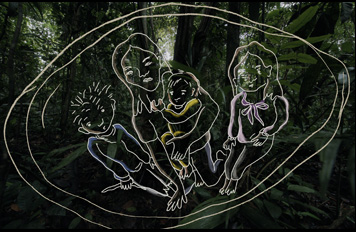
The way the children’s perspective is expressed with animation over the real footage of the crash site is particularly inspired when it doesn’t require them to be on camera as they have to recount this obviously traumatic event. How did that whole idea come about?
Chai Vasarhelyi: All documentaries have their unique constraints and that creates the opportunities. And it was a few things. First, they’re children and they were also starving, so their memories are spotty and they see the world in a way that’s different from you or I would see it, just everyone sees the world differently, so how do you honor that and allow audiences to experience what it must’ve been like for them lost in that jungle? They weren’t scared of the jungle. It’s what they know. It’s home, but they are scared of the soldiers.
Traditionally, I haven’t used much animation in my films because I find that it’s manipulative in some ways, but I thought that the line drawings were a good compromise because if the rescuers couldn’t find them yet, we shouldn’t be able to see them, but we can listen closely to their words and try to understand what the experience was like. And we were acutely aware of the sensitivity of the footage from once they were found. Those images are shocking. And also, I was really proud of how we could include them on camera at the end of the film because as you see in the interview, it’s Monica, a mental health professional who works very closely with the children and [talking about it] was their form of therapy, so it’s like a way of trying to help them understand and process, but still giving them an opportunity to tell their own story, which is fundamentally empowering.
Have you actually gotten to show the film yet to those involved in the search in Columbia?
Juan Camilo Cruz: Yes, we have. We showed it to the families of the children and they felt that the film portrayed the reality of what happened very well and they feel very proud of having been a part of it. The children have not seen the film because of course, it is not a film for children, but in terms of the families, it was a beautiful closure of a very long and complicated experience that at the end paid off.
“Lost in the Jungle” is now streaming on Hulu.