
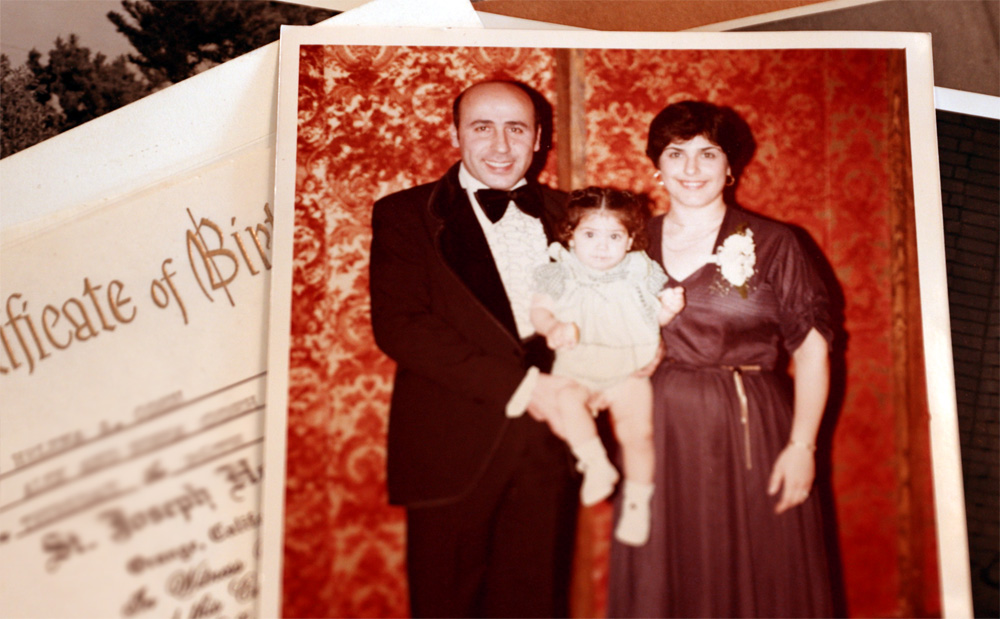

When four members of the Palestinian Liberation Front hijacked the Italian cruise ship the Achille Lauro in 1985 to demand the release of Palestinian prisoners in an Israeli jail, ultimately killing one of the passengers, Alex Odeh gave a rare interview to his local TV station in Southern California expressing an understanding of the desperation that would lead to the terrorist act if not an empathy when his work as part of the American Arab Anti-Discrimination Committee gave him a front row seat to the horrors that occurred on the contested Gaza Strip on a daily basis. Any nuance to his words, which were meant to turn down the temperature on tensions rather than raise them, was lost when condensed to a soundbite and willfully misinterpreted, and not long after his offices in Santa Ana were bombed when he was inside. No culprit was ever named even after the FBI started an investigation in the immediate aftermath, though any interest in pursuing the case appeared to die down as it faded from the news.
With a title like “Who Killed Alex Odeh?” it would seem as if directors Jason Osder and William Youmans would set out to answer that — which in following around investigative reporter David Sheen, they just may have — but they raise plenty of other compelling questions along the way when the lack of motivation to bring those responsible for Odeh’s death to justice reflects the lack of regard in general for the Arab community that remains at the root of the conflicts that exist both in America and abroad. Although it may be a cold case for the authorities, Osder and Youmans find that Odeh hasn’t been forgotten by the community at large, visiting with Odeh’s daughter Helena and wife Noura, who remains to this day too heartbroken to recount her experience of learning of her husband’s death, and joining Sheen, who has been piecing together a troubling connection between Odeh’s murder and Meir Kahane, the founder of the Jewish Defense League in America whose influence extended across the ocean as disciples of his hardline ultra-nationalist views on Israel were encouraged to use violence to achieve political goals.
Like Osder’s previous film, the essential “Let the Fire Burn” about the conflagration between the activist organization MOVE in Philadelphia that was met with a bomb from the local police when they refused to evacuate from their headquarters, “Who Killed Alex Odeh?” becomes as gripping in interrogating an ideological divide as it does in charting what led to tragedy as it extends from Santa Ana to Tel Aviv where some of those strongly suspected of being involved in the 1985 bombing now live. After premiering at Sundance earlier this year where it won a Special Jury Prize for journalistic excellence, the film is now arriving in theaters and Osder and Youmans talk about the unexpected way a collaboration came to be for the professor pals, being able to revive Odeh’s spirit even for his family through rare archival finds and tapping into a very active investigation with Sheen.
 Is it true this all started at a post-screening Q & A of Jason’s previous film “Let the Fire Burn”?
Jason Osder: Yeah, Will and I were colleagues at the George Washington University at the time I screened [“Let the Fire Burn”] — I don’t know if it was a full cut or an excerpt, but privately for family and faculty, and this was a story [in “Who Killed Alex Odeh?”] that Will grew up with and someone asked if I had anything I was working on and I invited people to pitch me ideas and he pitched me this idea.
William, what made you want to ask?
William Youmans: I had grown up with the story as Jason mentioned. My family was part of the ADC, the same organization that Alex was with when he was killed, and even when I was a young kid, I went door to door helping my aunt and uncle sign up new members. So when he was killed, it sent shockwaves through the whole national community. I grew up many miles away in the Detroit area, but it was a story that was just constantly brought up. There was a cause demanding justice that I was frequently part of and seeing calls for different events. Alex’s name was also brought up as a cautionary tale about the dangers of being too outspoken, so it was really important to my political socialization. Then when I saw Jason’s film it really brought Alex to mind because the firebombing at MOVE Headquarters was in 1985, which was the same year that Alex was killed and then there were some similar themes about marginalized communities and political violence in the state that really resonated with me.
So during the Q & A when that question was asked, a little light bulb went off on my head and I pitched him right there. He started talking about the film more and more, asking for research and then he eventually said that he’ll only work on it if I join him. I wasn’t a filmmaker at the time and I was on a tenure track where the expectations for traditional scholars were writing a book and academic articles. So it was a big decision that I had to make. But I was so tired of the story not being told and I felt like it was a hidden history that needed to be unearthed and Jason was the perfect partner for doing so, so I threw caution into the wind and having Jason’s expertise and his vision was something that benefited me so much. I learned filmmaking through this process.
 As Will brings up, I wouldn’t want to draw too strong a comparison between this story and the one in “Let the Fire Burn,” but when they share parallels, did having that experience give you a roadmap for how to tackle something as complicated as this?
Jason Osder: There are a lot of strong parallels. If anything, as Will said, both of these bombings happened in 1985 and both speak to issues of marginalized communities, impunity and state violence. But they were pretty different and in a lot of ways, I think I was maybe overconfident coming out of “Let the Fire Burn” when I felt like I made my statement on issues of race in America and my hometown in terms of Philadelphia and now I was taking on this issue from more of a perspective of religion. I’m really interested in American identities and I did a lot of work to try to understand the overall context of the story we were telling — I was raised Jewish and secular and the Middle East is extremely complicated. That’s work you keep doing.
What I also realized is every story teaches it you how to tell it and I think the relationship with the past is quite different between the two films. For me, the power in “Let the Fire Burn” was to put this [story] in the past, make it a time capsule of sorts, a morality tale and self-contained that still connects to the present. You just ask the audience to do that work and ask those questions. But here [with “Who Killed Alex Odeh?”] we realized that the connection to the present needed to be much more overt. The questions we were asking were more specifically about how events from the past reverberate in the present and that required a different set of tools. We definitely did some things to make this film that were completely different in terms of more confrontational interviews, hiding people’s identities, and investigative techniques. You learn something from each film, but I don’t think I had a roadmap going into this one by any extent.
David Sheen’s reporting becomes a real driving force for the film, but from what I understand, you may not have met him until years into the process. What was it like to bring him in?
William Youmans: We were connected to him through the widow of Robert Friedman [author of “The False Prophet: Rabbi Meir Kahane – From FBI Informant to Knesset Member”] and he was looking for into the same things that we were looking into in terms of archives, but he very much had his own reporting perspective. in the beginning of the film, we [thought], “Oh great, we have another source here,” so we interviewed him, but then over time he asked if we wanted to document him doing reporting. It transformed from him being more of a observational subject to ultimately becoming a real protagonist in the film because he was actively investigating and we had a front row seat to it and it really drove the plot structure of the film. We’d spent all this time tracking another investigator and then it fell off, so when David Sheen came along, it was a bit of a godsend in that sense. He was shut out of Israeli media and it hasn’t been easy for him to publish in U.S. media, so the film is a way to really bring his reporting to light and could be a platform for all his reporting.
Jason Osder: There’s actually very little that we shot that takes place before we met Sheen — most of what actually made the cut was stuff that we shot [after] and it felt like when the production really began and the stuff before was deep research.
Something else I was really moved by to learn after the fact was the relationship with the family and you were digging up archival footage that maybe the family hadn’t even seen before. What was that exchange like?
William Youmans: As we came across these archival discoveries that we were sure the family would not have seen, we wondered do we just send it to them because it’s so exciting and so important to them or do we reveal it to them on camera and hope for some sort of cinematic moment around it? We ended up sending quick clips whenever we would find things because it was too rare to hold on to and I wanted them just to have copies because they had no video of Alex or recordings of his voice. I think the only thing they would have had access to was his news interview from the day before he was he was assassinated that they would have been able to find on YouTube. But in terms of him in meetings or being at events, all of that stuff that we found and not all of it made the film, but one of the most fulfilling aspects of it was Helena said that she didn’t remember what her the father’s voice really sounded like. They didn’t have home video of themselves and some of the footage we found that was shot in ‘86 was from them as kids just playing in the living room, eating ice cream in the kitchen, so it was something we were able to give to them and they were just so grateful for that research.
 What’s it been like to start getting the film out into the world?
Jason Osder: For me, doing it it really comes back to the family. We traveled to Sundance and to Berlin with the whole family — Helena and Norma and her and Alex’s other two children — and just recently we were at Newport Beach Film Festival with the whole family, the extended family, and meeting Alex’s grandchildren, seeing how much the film has made to them. For years, they struggled not only the loss of a family member, but the loss of a family member in a violent way with no justice and feeling unseen and unheard. It’s maybe a little bit cliche, but [it’s special] to to be part of someone feeling seen. We had a great relationship and they were fans of the film, but it’s very personal and very traumatic and it was a big sellout audience at Sundance for the premiere, but you just don’t know emotionally how someone is going to react to that. Helena and Norma actually both reacted differently, but overall it’s been it’s been very positive. They’re very gracious and grateful and the best part of making the film is that relationship with them as well as the relationship with Will and the broader Arab community.
William Youmans: And for me it’s been a lifetime goal to have Alex’s story out to a wider public. It was underreported when it happened. Politicians weren’t exactly vocal about it, especially at the higher levels of the government. So it felt like something that was purposefully being erased from history and many people — many Arab Americans — have worked hard to keep Alex’s memory alive with the statue [in Santa Ana] and other kinds of memorializations. So it feels like this film really can elevate and amplify all those past efforts and that’s been personally important to me because his story has been so central to my upbringing and my understanding of the world.
“Who Killed Alex Odeh?” opens on October 30th in New York at Quad Cinema, Chicago at Uprising Theatre and Los Angeles at the Laemmle Glendale before expanding. A full list of theaters and dates is here.