




When Tasha Hubbard made the documentary “Birth of a Family” in 2017, there were the facts of the Sixties Scoop, the unconscionable separation policy in Canada that removed 20,000 indigenous children from their parents to be placed in foster care over 30 years, and the emotion of the reunion between four siblings that had never met each other as adults, but relatively little of the awkwardness that was surely a part of the meeting between biological relatives yet completely unknown to one another. Nerves might’ve been on display, but the uncomfortable pauses of not knowing what to say and broaching sensitive subjects are not the kind of thing that generally work in a nonfiction film with time constraints. Yet in Hubbard’s revisit to a cabin in the mountains of Banff where the siblings met in the documentary with actors now playing them in her narrative debut feature “Meadowlarks,” such reticence becomes dramatic tension for characters you’re only just getting to know and the director is able to explore the scars left by such a horrific government policy in a deeper way.
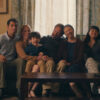
For those who saw “Birth of a Family,” there are traces of the Cree quartet of Betty Ann, Esther, Rosalie and Ben in Marianne (Alex Rice), Connie (Carmen Moore), Gwen (Michelle Thrush) and Anthony (Michael Greyeyes) – additionally, there’s a fifth sibling George, who can’t bring himself to join the reunion when being reminded of the past in any way is clearly too painful as a few phone calls to Gwen suggest. However, the others arrive in Banff in good spirits, all with a cache of photos and documents to compare their experiences of growing up separately from each other and mostly agreed on a full itinerary for five days of fun activities in the idyllic setting. Still, it’s clear from the start that everyone isn’t on the same page when Marianne, who flew in all the way from Antwerp, is eager to see the sights while Gwen, who has remained local, recoils at the thought of being stuck in a tourist trap and notably, she and Anthony, both of darker skin than Marianne and Connie, who resettled in predominantly white communities and likely spent less time in foster homes, slink off to a thrift store while the other two treat the early days of the trip like a vacation.
Hubbard is quite sensitive to the subtle ways that the quartet have been shaped by the different upbringings they had with a strong cast at her disposal, observing how awkwardly they try to put each other at ease, all having the same feeling but not the same experience to pull from – quite literally at times they don’t share the same language or colloquialisms when for instance Marianne is taken aback by Connie saying she can talk someone’s ear off. Generally, the film is graceful in tackling these abstract conflicts, though occasionally “Meadowlarks” does overreach in bringing them to the surface when Connie’s proposal of playing Trivial Pursuit goes horribly awry and Anthony spontaneously combusts the morning after, wondering how he could’ve intervened in the situation, seeing it as a problematic pattern over his whole life. Still, the issues being raised aren’t the obvious ones that come to mind with families that have been ripped apart, particularly in regard to a longing for a cultural heritage as much as a connection to other flesh and blood, and Hubbard treats them unusually tenderly, leading to an enormously affecting conclusion. In “Meadowlarks,” it isn’t reaching the top of the mountain that’s seen as a success, but simply having the courage to take the first steps that could lead there and with her first dramatic feature, Hubbard leaves quite a footprint.
“Meadowlarks” does not yet have U.S. distribution.