

What unfolds in the opening moments of “Queen at Sea” is shocking, but even being seated for the film might lead some to be in a state of disbelief when it could seem as if another film from its writer/director Lance Hammer might be a pipe dream. After making one of the great directorial debuts of all time with the 2008 drama “Ballast,” Hammer went unusually quiet in the years that followed, though the filmmaker had been a bit of an enigma before coming from a background in architecture and only having a few credits in visual effects before telling an indelible Mississippi Delta-based story of deep despair as it followed a family trying to carry on in the wake of a tragic death. (Besides himself, the film helped put future “Brutalist” cinematographer Lol Crawley on the map.)
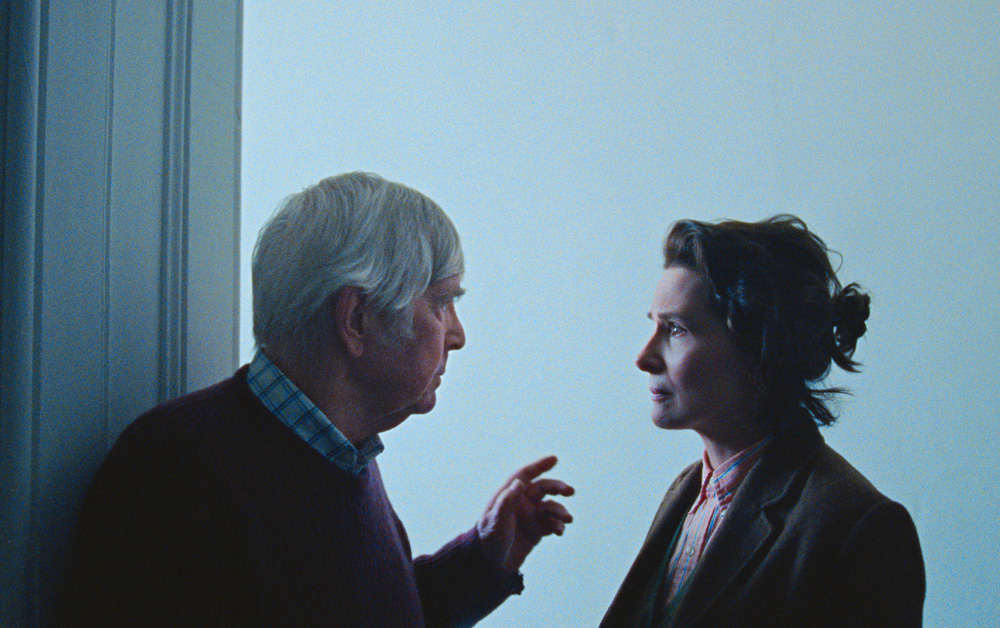
Hammer’s instinct for the unshakeable hasn’t diminished in the years since when “Queen at Sea” introduces Amanda (Juliette Binoche) thoroughly rattled by what she sees when she arrives home with her teenage daughter Sarah (Florence Hunt) in its opening minutes, finding her mother Leslie (Anna Calder-Marshall) engaged in sexual activity with her stepfather Martin (Tom Courtenay). An unsettling sight on its own, Amanda is even more disturbed to walk in on the moment of intimacy when her mother has dementia, making her incapable of consenting to sex in the first place and when it isn’t an isolated incident, the distrust that Amanda has of Martin to begin with leads to reporting him to the authorities, opening a whole other can of worms when social services considers removing Leslie from Amanda’s care in the house they all share together if they think her welfare is at risk. While Sarah can laugh off the incident of seeing old people in heat with friends of her own age as she’s on the verge of becoming active herself, Amanda is paralyzed by what to do when any decisions she makes will have immense consequences for the family as a whole.
The impossible quandary leads to a taut drama and after Hammer predominantly worked with nonprofessional actors on his debut, in part to garner authenticity they brought from being of the area “Ballast” was set in, “Queen at Sea” has a pair of truly legendary actors as its leads in Binoche and Courtenay, who once shared the stage with Calder-Marshall a half-century earlier, so the challenge of directing seems reversed, yet yields the same staggering and electric results. He also makes the setting of a British townhouse where the rooms go cold as the family unravels as rich a locale as employing the muddy topography of Mississippi to wade through grief, working with “Train Dreams” cinematographer Adolpho Veloso on a style that manages to capture in static frames the feeling of being stuck that Amanda experiences while illuminating the frisson all around her as she aims for a way out of the situation. Following its premiere at Berlinale earlier this year where Calder-Marshall, Courtenay and Hammer were all awarded with much-deserved jury prizes, the film is now opening in theaters across the U.S. and Hammer graciously took the time to talk about the process that leads to films that feel so remarkably honest and artful as well as how the time away from directing helped him return somehow stronger than before.
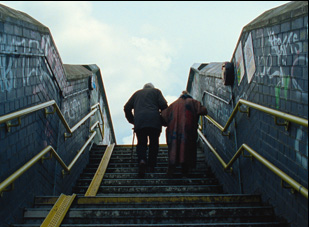 What was strong enough about this idea that you wanted to pursue it?
Generally, I started hearing a lot of stories about dementia all at once. I felt like everything was about dementia around me and then I heard some very specific stories about sexual consent issues, similar to the premise of this film. When I read some of those things, it was riveting because I just didn’t know what I felt. I was confused and ashamed about not having a more certain position. But then I realized I certainly am not alone feeling this way and this would be a really interesting way to make a film or write a story from a place of moral ambivalence when you begin and when you end in the same position without trying to propose any answers or positions, but showing in the 120 minutes between the complexities and the nuances of what many, many families are having to deal with. It’s a taboo that’s not discussed and families are ashamed of their own inability to have clear moral positions and they feel guilt and there’s all kinds of very troubling things. So I thought a position of being neutral and just examining the complexity would be a good way to make a film.
It was both economical but expansive to see the entire age range covered here when you include Sarah as the teenage daughter of Amanda. Was she always in the mix as a parallel?
Yeah, she was always in there. In fact, she was in there first from another story. But she was always connected to Amanda and I struggled with that character the most. She had a much more developed part at one point and It was hard to hard to write that one because I’m not 16 and I could never really write dialogue [for her]. I could write the scenarios with her mother, but I knew I had to wait until I actually cast the people to let them improvise the roles in the situations [after bringing the cast together] and it would be something that would come together during production, which was a little scary.
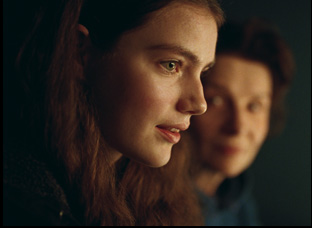 From what I understand, the experience of working with the actors wasn’t a whole lot different than it was on “Ballast” in that there was extensive workshops, but on that film, you were working with no professionals or actors with very limited experience and you’re working with real legends here. Was it different?
Yeah, [because] “Ballast” were non-professionals in that one I had to workshop it because I knew I couldn’t give a script to non-professionals and expect them to memorize the lines and do it well because that takes a lot of many years of training to as an actor to be able to do that where you can deliver it with naturalism, so the only way to find naturalism is to improvise the dialogue and workshop scenes together without a script being present. That worked really well for me, so I thought this could be a great thing to do with the best actors I could find, and use the same process, but it would have to be actors that were really on board for doing that and naturally capable of doing that. Juliette is, and Tom is, and Annie is too, so I thought, if you got masters together in workshopping, what would be the outcome? Because their technical mastery could also play a role. For example, Juliette can convey emotional complexity and nuance and contradiction like nobody else and Tom as well, so if I gave them a framework, a script as just a basis upon which they would bring their own souls and their own emotion, and their own ability to interpret a script, what would happen? It was a bit of an experiment. And they were all all game to do it.
What ended up happening were, I think, tremendous performances because you get a lot of authorship from them. They’re bringing their own language much of the time. We changed the script and the scenarios quite a bit in our workshopping together when we were all talking it through, so they became real authors. A lot of it came out of improvisation, but then they were able to bring their own technical mastery to it as well, so you end up with both of those things.
Is it true you were able to rehearse in the location you actually shot in?
Yeah, it was critical that we rehearse in the location because we were also rehearsing with camera with Adolpho Veloso [the cinematographer]. So we were workshopping both the camera and the compositions and the setups and the way bodies are moving and the performances, so we were all present together. That only was able to happen halfway through the workshopping because we didn’t get the location until halfway through. We had to really fight to get it early. It’s expensive to get it early, and then we did. The film really was made there in those several weeks when we had everybody together and it came out of a very improvisational environment, both with camera and the actors. Then when the time came to shoot, we knew exactly what to do because we’d already worked it all out.
But the space itself changes the way the workshops work. It changes the material that you’re improvising because you relate you’re you’re reacting to the space you’re in and space itself is very influential on emotion and the choices you make for movement, the way the actors are standing and the way you’re looking at them under the camera. So you have to have time to figure that out and let it or organically reveal itself. You can only do that in a workshop if you have that time, so the actors have to commit to a lot of time before the shoot, which is very difficult to ask actors to do, but they all wanted to do it.
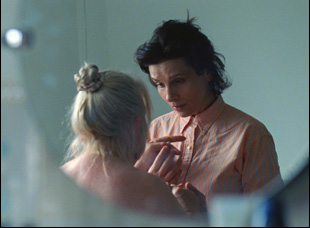 You’re able to let this unfold primarily in these static shots where you’ll often use rack focus to shift perspective in a scene. Did Adolpho Veloso have a lot of leeway in terms of being attuned to the performances like that during the shoot?
Yeah. At first, because we hadn’t worked together before, you’re cautious. I didn’t know how much I was going to have to be in control of that process to get what I wanted. But it turned out by accident, we just really see eye to eye and it was discovered in the workshopping process because he’d be lining up a shot and I’d see him over there trying to figure out how would he would want to shoot this and I would be doing the same thing. And the actors were present, so I go talk to him and we have exactly the same idea, which was a tremendous relief for me because I needed to spend a lot more time with the actors. We were running out of time. So I just gave him control, and I knew he was always going to choose something that I was going to choose. I was involved in much of it, but not as much as I thought I would have to be and he would come up with ideas that were superior to mine because that’s what an expert in their craft in their field does. His authorship was tremendous in in terms of camera and composition and the overall aesthetic of the film.
It’s interesting that the collaboration is so additive, but by the time you reach the editing room, you’re all alone. Are you comfortable by the time you get there?
I guess that’s a debatable question. I did a short film where I worked with an editor, but I’ve only edited both of my films and so I find it very difficult to see a distinction between writing, working in the collaborative production process, and then editing. It’s all the same. The editing is just the completion of something, you’re following through with it and I spend a lot of time. There’s a point where collaboration is too much and what I want is to capture the highly collaborative co-authoring of the material on the negative. Then I actually want it back, to be honest. It feels a little bit vampirical even — like I can’t do what Juliette, Tom and Annie do. They’re masters and I want that. They can give me something that I could never do myself or even come close to approaching, so in a sense I feel like I’ve stolen it from them. Only to take back to my little cave and organize. It takes a lot of time to organize the pieces and find, and that’s where I feel much more it’s about me being an author. But I’m working with material that came from someone else. It’s pretty much like a documentary, I think. Like I’ve captured something that’s not mine and some their performances, their souls, but I’m just organizing it to give you the best presentation of it. And that feels very personal to me.
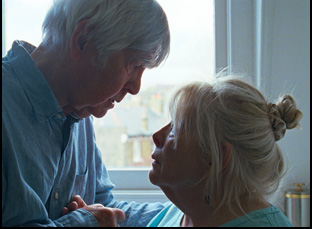 You’ve said in other interviews that you felt you could let go a little more than on your first film. Was it rewarding to make a feature so many years later where you had more perspective?
Yeah, it is. It’s rewarding just to do it in the first place, but then when you get when you see the rewards it it it delivers to you and It’s amazing like to to to let Julia and Tom do what they do as experts and and reap the benefits of that, there’s nothing more rewarding. And I had almost nothing to do with that. What I did was create a framework for them to be free and give the very best that they can. It feels like luck when you receive an artistic windfall, and there’s a really beautiful feeling in that and in collaboration with like-minded people that have the same ideas about the creative process that are very passionate about achieving the highest art possible. When you’re collaborating with people like that, there’s nothing more invigorating. And that was my favorite part of this process. And you’re right. It comes with being 18 years older than I was when I made “Ballast.” You mellow, you become more open. And I feel like it was rewarded by these incredible performances, and that includes Adolpho, yas that’s a kind of performance he’s done.
“Queen at Sea” opens in limited release on October 30th, including in New York at the Angelika Film Center, in Los Angeles at the Monica Film Center and the Encino Town Center , Birmingham at the Sidewalk Film Center Cinema, Scottsdale at the Harkins Shea 14, Wilmington, Delaware at the Screening Room at 1313, Springfield, Missouri at the Moxie Cinema, Hudson, New York at Time & Space Limited, Cleveland at the Cleveland Cinematheque, Tulsa at the Circle Cinema, Corvallis at the Darkside Cinema and Burlington, Vermont at Partizan Film. A full list of theaters and dates is here.