


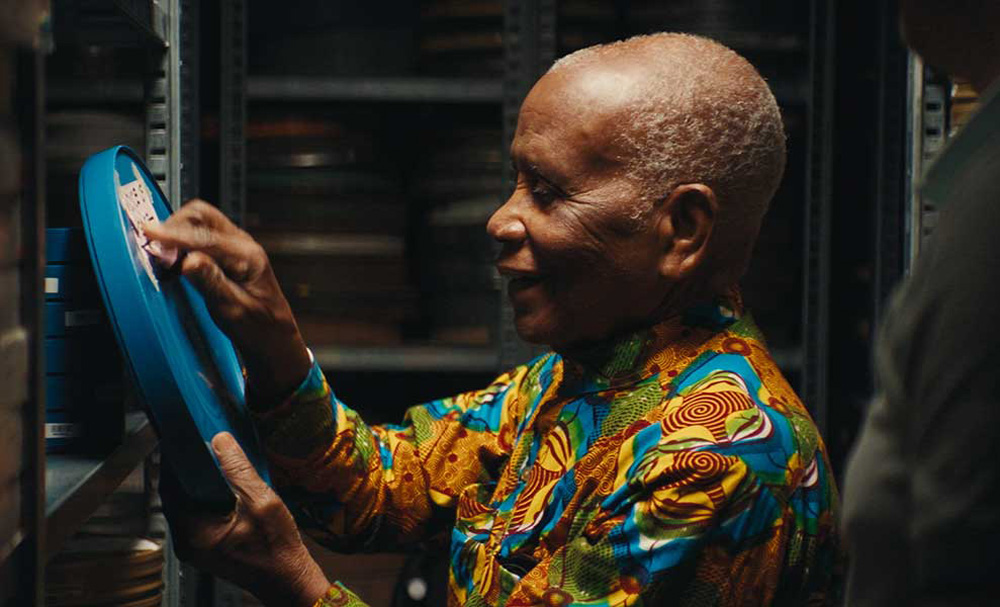

At the age of 90, Chris Hesse admits at the start of “The Eyes of Ghana,” but he’s seen everything and more importantly, as it pertains to Ben Proudfoot’s feature debut, it was largely though the lens of a camera when he was assigned to serve as the personal cameraman for Kwame Nkrumah, who served as president from 1952 to 1966. As Hesse explains, Nkrumah had studied history in America where his interest was piqued by civil rights activists such as W.E.B. Dubois and the soft power the country had exerted during World War II, producing films that would champion the cause of democracy around the world, and wanted his own administration documented for such purposes, the importance of which was backed up by the fact that the footage was the first thing that the enemies he’d make during his time in office would seek to destroy. They would’ve succeeded had it not been for the fact that Ghana was too hot a climate to properly process film, requiring Hesse to send his rushes back to England where the negatives remained even as copies in Ghana were desecrated.
Nkrumah remains a controversial figure in Ghana where some came to think of him as a dictator for the sweeping powers he accumulated while in office. But Hesse sees his leadership as the start of liberation for the entire continent of Africa from a colonial mindset and while he’ll tell anyone who asks that they are free to make up their own minds from what they see, the fact that this footage still exists at all is bound to free up people around the world to think about Ghana in a different way as brief glimpses from films such as 1958’s “Upsurge” and 1966’s “Ghana Reborn” offer a completely different point of view than much of the media that has made up historical references for the country. As Proudfoot slips into the end title cards of “The Eyes of Ghana,” only 15 minutes were really available to him when the costs of digitizing and restoring the footage remain onerous, but the statement is made with justified confidence that even from the small amount available, it’s revelatory. Coupled with the spry Hesse as a guide, leaning forward to talk and apt to tap the lens of Proudfoot’s camera to make a point, this film makes for a lively history.
While “The Eyes of Ghana” is primarily galvanizing for showing Ghanaians having the agency to tell their own story as part of a larger effort to escape the large shadow cast by British rule through 1957, it can be enjoyed in its present-day story alone when it affirms what Nkrumah believed all along about the power of cinema as a medium with the ability to unite. Hesse is telling his story now due to the research of Anita Afonu, a film student who sought him out during the making of her own documentary about the rise and fall of Ghanaian cinema when seeing his name on the camera crews of so many films, and he had revealed to her the existence of all the footage he shot, leading to the start of a preservation effort in earnest. Of course, a film isn’t complete until it’s seen by audiences, leading Proudfoot to seek out Edmund Addo, the projectionist for the Rex Theater where cobwebs literally have to be cleared away since the glory days of the cinema, but nonetheless will be the home for any screening of the footage and Addo has devoted his life to the place, making it his living quarters as much as his work.
With both the clips of Hesse’s documentary footage interspersed throughout the film and a soaring score from Kris Bowers (with whom Proudfoot previously teamed with the composer as a co-director on the Oscar-winning “The Last Repair Shop”) leave no doubt about where “The Eyes of Ghana” is headed or where it stands itself on Nkrumah’s tenure, but it does actively show the president’s beliefs coming to pass a nearly a half-century after his death as a new generation of film students and even younger appear to take up the cause of protecting the country’s history from their perspective and the footage from his administration standing the test of time against all odds. The process of filmmaking from start to finish has rarely looked so important as it does here, and while it suggests the work is never done, it sensationally reflects a medium with an unusual capacity to bring people together.
“The Eyes of Ghana” does not yet have U.S. distribution.