
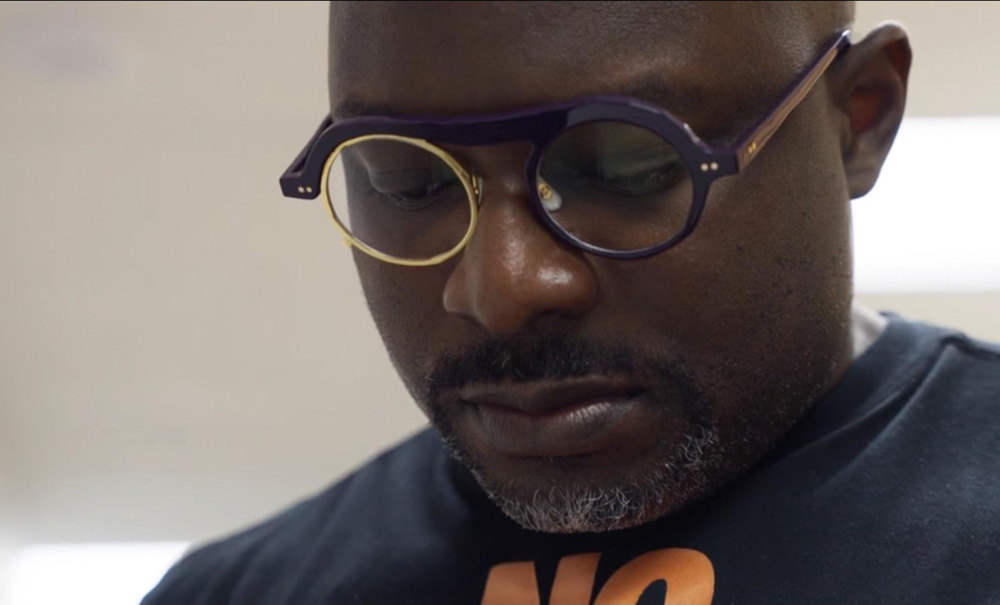

Dr. Foluso Fakorede gets the type of movie star introduction in “Bloodlines, Mississippi” that establishes who he is and what he does so instantly that an audience might not give much thought to it, yet it required plenty of care and consideration on the part of director Crystal Kayiza. A simple move of the camera panning up as Dr. Fakorede is checking his paperwork at the Cardiovascular Solutions of Central Mississippi clinic reveals a man at the center of the action both breaking with tradition a bit in his profession as well as his area of practice in the Deep South to go by the loud “No Heart No Chance” T-shirt he wears to conduct his rounds and the stylish purple and gold-rimmed glasses you notice when the lens reaches his face and as much as the upward trajectory suggests this is someone to admire, it also honors how firmly his feet are planted in the community he takes care of.
“That was actually something that really had to be rewritten and developed in the edit — the balance of the understanding that he’s very much the narrator of this story, but knowing that his work is possible because of the community of people that he represents,” recalls Kayiza, who has long shown the presence of mind to capture such images on the ground that can tell a story within themselves in the first place in such films as “Edgecombe” and “See You Next Time.” “So that wasn’t even necessarily something on the front end of the edit that we thought was going to be the introduction of the film, but as an image, it’s a good representation of the energy and presence that he has at the clinic.”
That ability to be concise is what allows the filmmaker to pack so much into her latest 20-minute short about the preventative care that Dr. Fakorede and his staff provide in the predominantly Black community in the Mississippi Delta where diabetes has become a major issue and residents can’t usually afford the insulin to manage it, an area where Dr. Fakorede felt he could make the greatest impact, a medical desert where the residents have largely depended upon one another for decades.
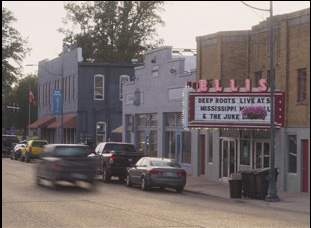
Inevitably, the camera gravitates towards Dr. Fakorede when he has the knowledge to lead the community away from believing the only available remedy for circulation issues available to them is amputation, advising far less extreme measures such as exchanging sweet tea for water with lemon. However, Kayiza generously spends as much time with the patients that have come into see him and in the region at large, finding beauty in both natural wonders such as the nearby Mississippi River and more mundane man-made structures like the local grocery store when they both reflect a way of life that’s well worth protecting and the conscientiousness of the community to look out for one another as best they can, presenting Dr. Fakorede as much a product of his environment as a reformer inside of it.
Kayiza has often found hope in places of despair when people have found one another to lean on and “Bloodlines, Mississippi” may illustrate a desperate situation, but also celebrates a collective resilience that can lead to survival and the film itself is the result of a collaboration between formidable partners when the director teamed up with “Virunga” director Orlando von Einsidel’s production company Grain Media and the Nobel Prize for their ongoing series about medical breakthroughs. With the film making its Philadelphia premiere this weekend at Blackstar and available to stream anywhere via their virtual platform for 48 hours following its in-person bow on August 3rd, the filmmaker spoke about how she was able to express her own appreciation for the community that welcomed her in to the fabric of her latest short, finding where artistry and advocacy collide and filming in a sensitive space such as a medical facility.
 How did this come about?
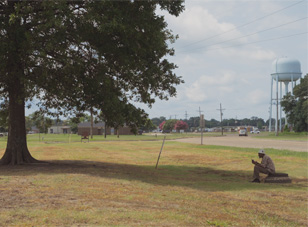
I’ve been working on a feature film in Mississippi for a few years now, so I’ve grown to not only really love it as a second space and a second home, but I’ve become really familiar with the landscape and really interested in the storytelling in that state, so when Grain reached out about this project in collaboration with Nobel, I was really excited to figure it out. Oftentimes, it’s very different transitioning from directing your personal creative work into collaborating with someone else on a story that’s kind of been researched and developed, but I was really interested in the work that Dr. Fakorede was doing, but also thinking about it in the context of a state that I had really grown to deeply appreciate the community there and the history and legacy of the people that are not only living in the Delta, but across the state of Mississippi.
Was Dr. Fakorede was always the center of this, given it’s such a broad subject?
I met Dr. Fakorede pretty early on in the pre-production process, and I’m really grateful for how generous Dr. Fakorede and his staff at Cardiovascular Solutions were. Grain had developed a relationship with Dr. Fakorede [already], so a lot of the work on my end was cultivating our communication and he made himself available for conversations with me just for us to get to know each other and that relationship was the basis of developing the creative intention and the approach for the film.
Part of the work that I’m interested in in non-fiction filmmaking is really trying to figure out where my creative intention or vision naturally meets with the reality of the spaces that I’m making films in and oftentimes, I also feel when people are approaching impact-driven documentary work or films that have an advocacy intention, it’s often not necessarily put in conversation with the medium and the craft of imagemaking. One thing that I realized very quickly was that the community of people that work and come through this clinic as patients or were vitally important to have as part of the story, and the immense love, care and conviction that everyone that I spoke to at Cardiovascular Solutions had around the work that they were doing, I really wanted to imbue that care into the image itself. It’s not only about me as a director being brought onto this project about understanding the issues, but I think my role is figuring out how those issues and the atmosphere of the community that Dr. Fakorede has built can live within the images that are created.
So I had a lot of conversations with the entire team, but specifically, did a lot of developing the creative approach with Emir, a cinematographer on the film, thinking about the tradition of advocacy and impact-oriented documentaries and nonfiction work. Watching a lot of news coverage and other things that have been made about this issue and the depiction of communities in the Delta oftentimes feel removed [from the reality]. The beauty of the landscape and the community in Mississippi is also part of the story and it was really important to visually and creatively represent, so I was thinking about framing and composition and how we wanted to form the image and the creative language that we wanted to create, all in conversation with Dr. Fakorede and the team as well. It’s always this fine line of trying to understand and articulate the important information, but doing that within the context of what I believe is my role as a director, which is to create images and figure out the language of the stories that I feel incredibly privileged to be able to hear and share.
 Being a medical clinic, this must be a sensitive environment to begin with. What was it like to sensitively navigate this?
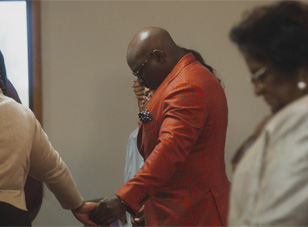
One thing I was definitely apprehensive about was how do you make a film in a sensitive space, specifically with the production approach that we have [where we’re not] sacrificing the artful nature of the story that we were trying to tell with, in collaboration with all of the work and the labor that the nursing staff and Dr. Fakorede put in. I cannot say enough how incredible the team at Cardiovascular Solutions are – the leads on Dr. Fakorede nursing staff and all the folks coordinating his administrative work and they ensured that we had a very, very clear understanding of the operations of their clinic. They gave us firm boundaries and we did everything we could to respect those boundaries, but their openness and level of transparency and care that they showed us alongside all the patients that they were working with, it was so wild to see how they never missed a beat despite having an entire film crew there.
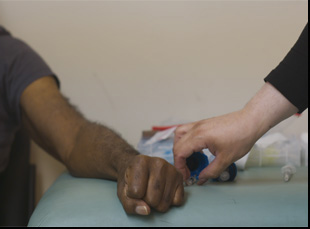
I wanted to keep our footprint small. They’re working with a ton of different patients every day and often have situations that are really urgent, and I didn’t want to disrupt the level of care that they were providing and a lot of the labor went to ensure that the production had access to having conversations with patients and ensuring that everyone that walked into the clinic was knowledgeable about what was going on, ensuring that people that didn’t necessarily want to be part of the production were protected. There are also a lot of patients that we filmed with that aren’t necessarily a part of the film. We had to make a lot of those decisions in the edit to understand we were meeting people at a really difficult time in their lives and respecting that the audience is not [always] going to get the full scope of their lives and personhood, [but it was important] being able to be in the room and that space with them. For me, part of that meant making a film that also respected the beauty and care of what was happening inside of the clinic and also the community and the landscape that they lived.
 Was there anything that happened that changed your ideas of what this was or took it in a direction you didn’t expect?
Yeah, working with the film’s editor Andrew Cross, was a really, really wonderful experience and we had never worked together before and he had the difficult task of understanding the experience that we had without being on set, because so much of what drove the edit for me was my actual feeling when I was in the clinic with the crew and spending time with Dr. Fakorede. I wanted the feeling of the level of care that was being provided in the space to be translated into the actual structure of the film. But the language around that was very specific to being there in person, so Andrew and I did so much experimenting and trying so many different things. There was a lot of material, and we were filming really full days with a lot of different patients and having conversations with Dr. Fakorede about a lot of really dense issues. And I’m grateful for my collaboration with Andrew because, almost at a distance, he was able to really tap into not only figuring out the creative language of the film, but honoring the experience that all of us on the production side had at the clinic. He figured out how to take all of these memories and very abstract ideas in terms of the emotional nature of the experience into the actual edit. As with all documentaries, there were many, many versions of this film, but his openness and willingness to experiment and try different things before we locked picture was a really amazing creative experience.
You mentioned a feature, but I’ve really admired how you’ll find these places and give them a spotlight in shorts. Is that work you think you’ll continue?
That’s a good question. Having nonfiction filmmaking as my foundation in terms of my work and my practice, I feel like so incredibly grateful for it. I don’t imagine there being a time where I’m not interested in making nonfiction work and I really love the process of making short nonfiction work, spending the time understanding a place. It’s a huge privilege and in a lot of ways, the life of a short film oftentimes feels very short, but everything that happened before you start rolling and all of the relationships that you take with you into the next film or into my life as a person is something that I hope I get to continue to do.
I can’t say what’s necessarily next, but that I’ve received so much from the community I’ve met as part of this experience with “Bloodlines” and I’ve built friendships and created these close bonds within Mississippi through my feature project that, in a lot of ways, I wanted to honor that experience that I had as a filmmaker through this film. I hope that my work can also be a representation of how generous [people are]. Oftentimes, you don’t think about, the lives of the people in nonfiction work and people that choose to share their stories. I just feel like it’s such a huge privilege to be able to like say that this is my job and the work that I’m doing. So as long as people are still open, I want to continue doing it.
 What’s it been like sharing this one so far, starting with deadCenter?
deadCenter is a bit of a hometown festival for me. I grew up in Oklahoma and it was the first film festival that I ever screened any of my work at, so being able to screen there was hugely important unfortunately, I wasn’t able to attend, but Dr. Fakorede was, and I’m really grateful that Dr. Fakorede and his family has community on the East Coast that will be able to come out and see the film on the big screen at Blackstar, [which] is also one of my favorite film festivals. It’s an incredible community. Every experience that I’ve had at Blackstar has like really affirmed why I want to continue this work. The energy and the environment that they’ve cultivated I feel is unmatched, at least in festivals in the United States. I think that this film will have a really incredible journey and obviously film festivals are an incredible way for people to see work, but what I’m interested in is making this film available to people to watch as a tool for advocacy for Dr. Fakorede and all the medical professionals doing this work. I hope that it continues to resonate with people and I’m really excited and looking forward to sharing at Blackstar as well.
“Bloodlines, Mississippi” will next screen at the Blackstar Film Festival in Philadelphia on August 3rd at the Wilma Theater at 7:30 pm and will be available for 48 hours as part of the Galvanize Shorts Program virtually beginning on August 3rd at 10:30 pm EST. It will next screen at Bronzelens Film Festival in Atlanta, starting on August 20th.