


In order to illustrate Robert Christgau’s grading system in “The Last Critic,” there’s eventually a montage of album covers that runs from A to E (the equivalent of an F, though the Village Voice rock critic was loathe to dismiss any album as a failure — though anything that earns a D+ he does consider “an appalling piece of pimp work”). It isn’t meant to be a definitive rating by any means, when Christgau knows all he can speak to is his own personal taste and holds that to be a good critic “you have to know what you like and explain it, even if it’s completely disgraceful.” Some will surely take issue with Taylor Swift receiving an A- for “1989” while Big Star’s “#1 Record” sits just below with a B+, as does Beyonce’s “Cowboy Carter,” trumping Dr. Dre’s landmark “The Chronic,” which got a C+ as Christgau’s eclectic tastes are reflected by a parade of albums that would never be put in this same order by anyone else, but in conjunction with one another gives a good sense of what qualities he appreciates most and the holistic view he takes towards music as a whole.
It seems like it’d be impossible to articulate what Christgau actually has accomplished in a six-decade career and in a sense, it remains elusive when as much as those who worked under him at the Voice such as Ann Powers and Colson Whitehead can offer praise, his impact on the craft of arts criticism can’t be overstated, having essentially invented the capsule review with his monthly consumer guide. However, director Matty Wishnow continually finds ways to keep things interesting throughout the biography of the writer who has always done so in his own prose, leading Boots Riley to say while reading a passage of Christgau’s review of The Coup’s “Sorry to Bother You,” “It’s satisfying to read his work because I can hear how he’s listening.” He isn’t the only artist that Wishnow coaxes to read a review of their own album, having Thurston Moore recall shots fired at Sonic Youth, a group that Christgau ultimately turned around on, and blissfully uses his many, many interviews with seasoned pros to encourage debate as surely Christgau would want it over what makes good criticism, the relationship between artists and critics and what Christgau wrought with his grading system, which was novel at the time he started attaching them to reviews in 1969. (As he argues, if you can put a price on an album, you can put a letter grade on it too.)
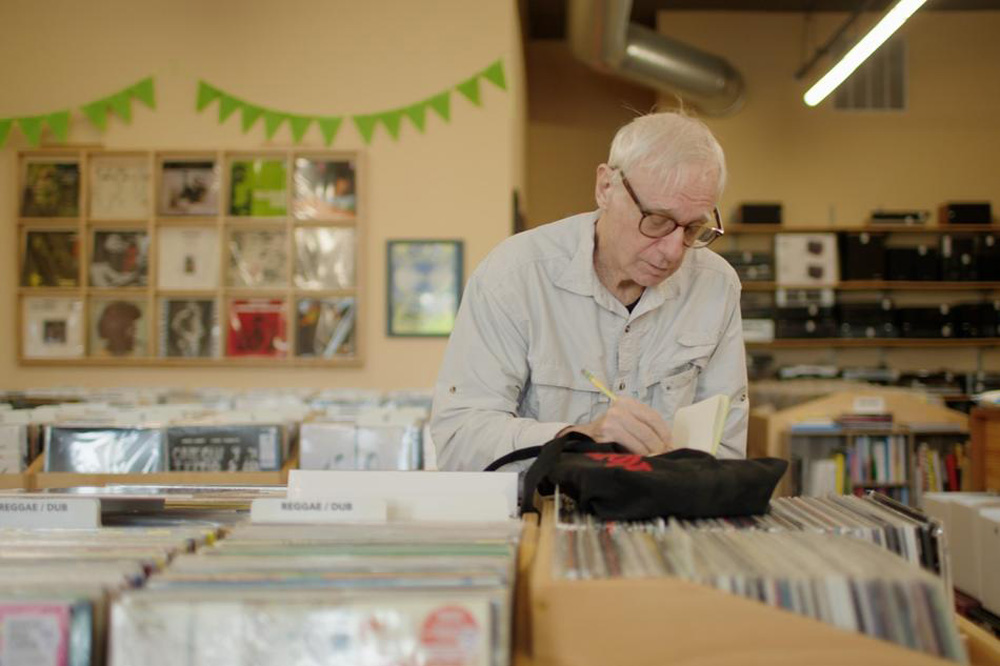
There’s a half-hearted attempt at something more formally conventional when Christgau is introduced in the film putting together an edition of consumer guide and checks in on him over the course of a month, stuffing CDs into a player in his cramped home office and making decisions not only over the word choice in the reviews he does write, but what albums he’ll decide to leave out entirely. (A bit of drama develops over Lil Wayne’s “Tha Fix Before Tha VI,” a mixtape released ahead of his next proper album “Tha Carter VI,” and beyond debating whether it’s official enough to warrant coverage, the rapper’s ties to Trump also threaten to drop its position on the playlist.) But Wishnow and editor Paul Lovelace wisely avoid tying the film too tightly to any chronology, more invested in capturing someone who has had his finger on the pulse of contemporary music over half-a-century than dutifully going over a whole body of work as personal milestones are presented with more significance than professional ones, though they are largely intertwined – it was Christgau’s relationship with New Yorker music critic Ellen Willis that first introduced him to writing about rock and his subsequent marriage to fellow writer Carola Dibbell, who still proofs his copy, is seen as crucial to his ongoing productivity. (Although Christgau’s opinions are fiercely personal, the fact that his approval for Swift seems influenced by having to take his daughter Nina to concerts as a teen and will be inclined to give a higher rating to something Carola likes as well becomes a charming expression of their love for one another.)
When there’s been plenty of elegies for the Village Voice and the bohemian New York of the ‘70s and ‘80s – the recent James Hamilton doc “Uncropped” already covered similar ground well — “The Last Critic” shares its subject’s discernment when gracefully touching on those areas without expending too much time and energy there, acknowledging beyond its title that the world Christgau helped build and thrived in is crumbling due to forces out of his control when he needs only to walk outside to the former Fillmore East where he once saw so many concerts to see an Apple Bank to know where priorities have shifted culturally and following the end of the Voice in 2012, publishes the Consumer Guide on Substack. Yet neither Christgau or the film ever seems stuck in the past, fostering a vibrant dialogue that cuts across generations and musical tastes as it may be relating history but shows how the conversations keep the form alive and when Christgau, like so many other writers, throw their words out into the abyss without knowing the intense relationship it can spark, seeing so many in separate rooms on the same wavelength becomes rejuvenating.
“The Last Critic” does not yet have U.S. distribution. It will next screen at the Wisconsin Film Festival at the Chazen Museum of Art on April 10th at 3:30 pm and April 11th at 6:30 pm, the Milwaukee Film Festival at the Downer Theater on April 18th at 1:30 pm and at the Oriental Theater on April 19th at 11 am and April 20th at 1:30 pm, IFFBoston on April 25th at the Sommerville Theatre, April 26th at the Olympia Film Festival at the Capitol Theater and May 2nd at DocLands Film Fest at 7:15 pm at the San Rafael Film Center.