


At first, any frustration that there may be on the family farms that Brittany Shyne roamed around in “Seeds” appears to be taken out on the soil. Bountiful crops have been the product of the blood, sweat and tears that have been put into the ground along with the fruit and vegetables – nothing is wasted as Willie Head Jr. can be seen feeding corn cobs that were grown on one parcel of his acreage to the cows on another – and the already difficult work of maintenance is made all the more so by how much harder Black-owned businesses seem to have it in general, noticeably getting less federal benefits than the white-owned farms around them in the South. However, being true to what she witnessed, Shyne wanted to emphasize the grace of the investment these families had made in their farms as much as the hardship of it.
“These farmers are fighting this fight because this land is so important for them, for their future generations, for the grandchildren, and that land doesn’t just have economic value, but it’s also a sanctuary, it’s a respite from the outside world,” said Shyne. “All those things influenced me how I really wanted to shape this project.”
“Seeds” is bound to turn any cinema that it plays in into such a sacred space after Shyne honored the farmers’ commitment to their land and their legacy by putting in 10 years of her own into the making of it. A regal black-and-white chronicle of families that have become self-sustaining while weathering inhospitable conditions of all types, the film generously spends time with elders such as Carlie Williams, who can appreciate not only the annual yield from the crops that have been in the family for generations, but the sustenance it’s provided for the family to grow as well. To see the work now, it’s never gotten all that much easier, but it has allowed for some sense of security when it is fully owned and operated as a family business and something to be quite proud of.
Still, the precarious nature of keeping it going year after year comes into focus during a particularly difficult one as Willie Head Jr. gets involved in a local effort to claim federal subsidies in the midst of COVID for funds supposedly made available explicitly for farmers such as himself. As he struggles to find a compassionate ear amongst the bureaucracy he’s supposed to file a request with — or even someone on the other end of the line at all, the film is able to illuminate perseverance on multiple fronts that should never have been necessary in the first place, but makes the farms all the more impressive for what they’ve had to withstand and what the elders can pass down can hardly be measured in property alone.
After premiering nearly a year ago at Sundance where it picked up the Grand Jury Prize for U.S. Documentary, “Seeds” has since gone on to pick up a number of awards, most recently with Shyne selected as Best Director from the International Documentary Association, and as one of the most special nonfiction debut features of this decade opened in New York, Shyne graciously took the time to talk about the personal inspiration for taking on the longitudinal project, recreating the serenity she experienced during her time on the farm, and preserving what she can in film form.
 How did this come about?
I started this project back in 2015. I was in grad school and at the time, there wasn’t many films depicting Black farmers or Black agrarian life. Historically, we’ve been marginalized in the agricultural landscape and yet Black Americans have been integral to the structural fabric of American society through innovation, ingenuity, and resourcefulness and I really wanted to rectify their lack of visibility by making a film that paid homage to the community. My great-grandfather owned land in Homer, Louisiana and on my mother’s side, there were sharecroppers, which was another very complicated type of situation. But I was very just curious about this ancestral knowledge that I wasn’t really privy to. My dad grew up on the farm until he was four years old and he really enjoyed it and I really just wanted to really understand like what it takes to really maintain a legacy and all those things we see with farmers.
When you were filming for some time, was there a point you actually start thinking about this narratively?
It’s funny because I think my film is more of a feeling some ways. It’s not very plot driven. There’s a lot of themes that I knew that were going to be prominent within my film — the fragility and the permanence of time, and I knew that my film would be non-cyclical and non-linear. That influenced the creative choices throughout the film. Of course, the people that you meet dictate how the story is going to unfold over time. I met Belle Williams in 2015 when I went to Thomasville, Georgia and it’s funny because during that time, the farm was brimming and bustling with a lot of activity. There was a lot of older farmers like Carlie Williams and [with] Carey [Williams] and Walter [Williams], there was still a lot of energy on the farm. At the same time, I knew that there was something very precarious and tenuous about this space and that was at the precipice of many changes, so I think that influenced the creative process throughout this film. It was important to really capture these people’s everyday lives because I felt I didn’t have much time with these elders in so many ways, and one of the themes within my film is what type of knowledge would be forsaken or lost if we don’t really protect these elders or safeguard their stories.
I really wanted to make a film that really illustrated how there was something very sacred and profound about owning land for many generations and I think I didn’t know how to really tell that story. I just thought that the best way for me to do that is spend time with them. I didn’t want to do something that was traditional issue-based. I really wanted to center on these quiet and mundane moments that perhaps seem insignificant but become profound depending on how they’re juxtaposed within a scene. I think sometimes we think about these kind of adversities or hardships in a very overt way, but I really wanted to make my film that was diverting that instinct. I really wanted to slow down the pace and really embed myself in these people’s everyday lives. It’s one of those things where you make a film in the editing room too. You build this tapestry of these small moments and see how they’re going to unfold and evolve over time.
What it was like feeling out the rhythm of this in the edit to get that feeling you had on the ground? Time really is expressed so beautifully.
There’s certain moments that you know are going to be really significant for you in the film. I always knew the last scene with Carlie where he’s dealing with cataracts, but it also deals with aging and the ignoring of one’s pain, and also these moments that we see with Willie Head Jr. taking care of his grandchildren were moments that [in general] you don’t really know how things are going to take shape, but you know that there is something special about this moment, or with Margaret Williams in the hair-washing scene, the tactility of that and me being there within the space with her.
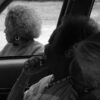
But the editorial process was really just finding the motifs of the film. I knew that car scenes were a recurring theme, so I was using that as a guide to [think] when do we come back to this space? The first scene of the film, we have Clara [Williams Cradle] and [her granddaughter] Ebere in the car and that scene does multiple things. We really understand how this young girl is inquisitive about life and death and how her grandaunt really talks about what happens when you die. But we see also see Ebere really understanding this legacy that surrounds her family lineage, the ones who’ve remained and the ones who passed away and that was how we found the rhythm was in these small moments.
 When you started out filming right from film school and you’ve obviously matured into such an accomplished cinematographer, was it interesting to look back on what you shot early on versus closer to the end and find a consistent style?
In some ways, I wanted to have a consistent style, but I think my style shifted depending on who I was covering. The elders lacked mobility, so we see them in more of a confined space and I knew that stylistically, we’d be on a tripod a lot. Whereas with Willie Head Jr., he’s an activist. He’s always on the go. He’s always multitasking. He’s always fixing his corn picker, and other machinery that he has, so that dictated how I would embed myself in this film. I was always handheld with him, but with the elders, I was more locked down.
You’ve said before that Willie came into the process far later than the other people that you were following, which blew me away knowing what a central subject he is now. Did things snap into focus at all when you met him?
What really is so incredible is that he’s just so charismatic, but also that he’s so open and really understands the urgency with these black farmers and their issues [that we can also convey it]. He does it in a way that is really succinct where we come into his house that he’s working on, but then we also see these other paramount issues with the Department of Agriculture with these phone calls, [saying] “We’re not getting any benefits” and how this systemic racism with Black farmers have been going on for many, many decades. And this isn’t the first time they went to DC [to protest]. They’ve been going back to DC for many years. And even in that scene at the grocery store, he talks about it pretty bluntly where we can understand [this issue]. Since there were 60 million black farmers, now there’s only 1% of black farmers left and if we don’t get any subsidies or federal assistance, how many Black farmers will remain? Throughout these verite moments, we really see this larger landscape of discrimination and inequity in the agricultural space.
The film really draws you in as much with the sound as the image. What was it like to spend time on that part of the process after you’ve shot the film?
I think the Southern space is naturally evocative, so I knew that sound design would be a huge component within my film. We don’t have a lot of music, but I really wanted to have the sound to be another element of storytelling within my film, especially during the process scenes, like the cotton scenes, and [capturing] the duality within the space — how this is a space that has been a space of brutality and generational pain and yet we also see a space of community and of people working together — so I really wanted the sound of kind of play at different levels. We worked with our sound designers, Dan Timmons and Ben Cruze, who did a magnificent job. But in some ways there’s moments where the sound is like a place of haunting and all those elements are infused throughout the film.
 When you’ve been carrying this for so long, what’s it been like to get it off your shoulders and out into the world?
It’s been an incredible journey and I’m still trying to absorb everything. People ask me this question, and there’s just been so many good moments with this film throughout the year. I’ve been able to travel the festival circuit and meet so many different audience members in different countries. The different connections that you make along the way have been really profound. And I have so much gratitude. But there’s just so much where you’re just really trying to take everything in. I’ve been so lucky with this film because when you work on this film, you don’t really know how it’s going to be received and the fact that it has done what it’s done, I feel very honored. Every day is amazing to me. As a filmmaker, it’s still a hustle, you’re still an independent film, and there’s still a lot of other things that make it difficult at times, but it’s been also a blessing too.
“Seeds” opens on January 16th in New York at Film Forum.